‘In the garden there is a small coastal area with many stones. We went bathing there sometimes, even though the water was much too cold in spring. Two large and probably elderly limpets live here, side by side on a heavy rock in the tidal zone.’
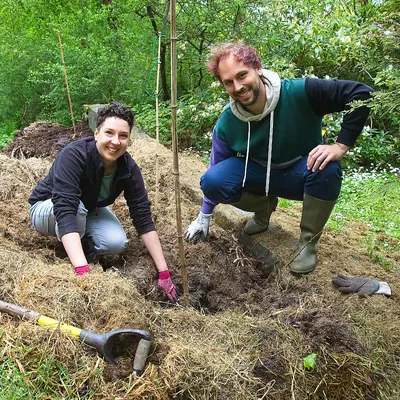
Nature Soft
‘More than a substance, plastic is the very idea of its infinite transformation.’
(Roland Barthes, 1957)
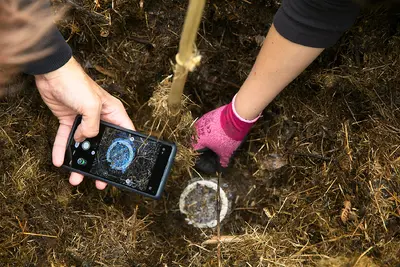
How does plastic die? Deep in the compost piles of Glenkeen Garden, Carolin Liebl and Nikolas Schmid-Pfähler pioneered artistic research on plastic ageing.
Immersing themselves in the heeps of naturally heated flora waste, they delved into the biodegradability of specific plastics, aiming to depict the explored transformations visually.
Composing a sort of indexical photography of de-composing processes, Liebl and Schmid-Pfähler represent processes of micro-narratives, crafting maps that reveal the hidden yet vibrant worlds of decay and rot as well as the discrepancy between eco logical promise and actual deterioration.
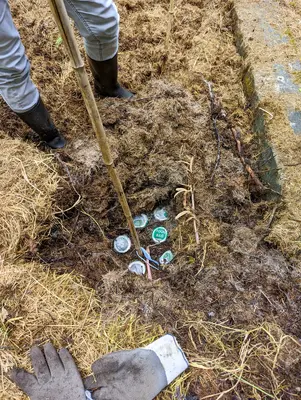
Foil 7P0258/S0426 after five weeks of exposure, Photo: Carolin Liebl and Nikolas Schmid-Pfähler
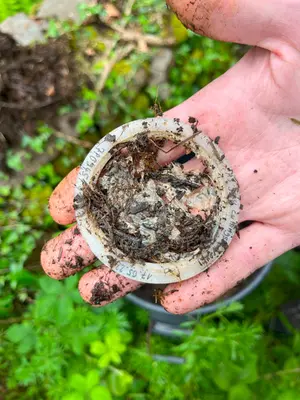
Foil 7P0258/S0426 after five weeks of exposure, Photo: Carolin Liebl and Nikolas Schmid-Pfähler
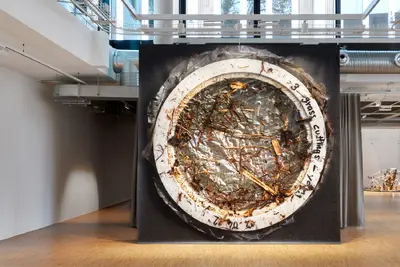
Nature Soft, 2024, Photography, 300 × 300 cm, Photo: Jens Gerber
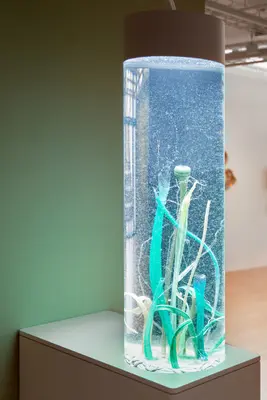
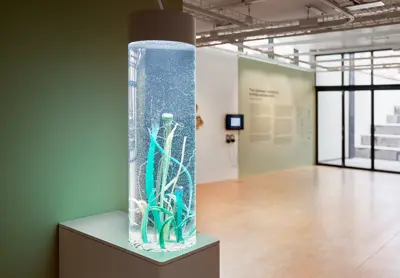
Cho. I’m breaking up with you., 2024, Polyacrylic acid, Sodium hydroxide, 20 × 20 × 70 cm, Photo: Jens Gerber